Science Curriculum Statement:
Intent:
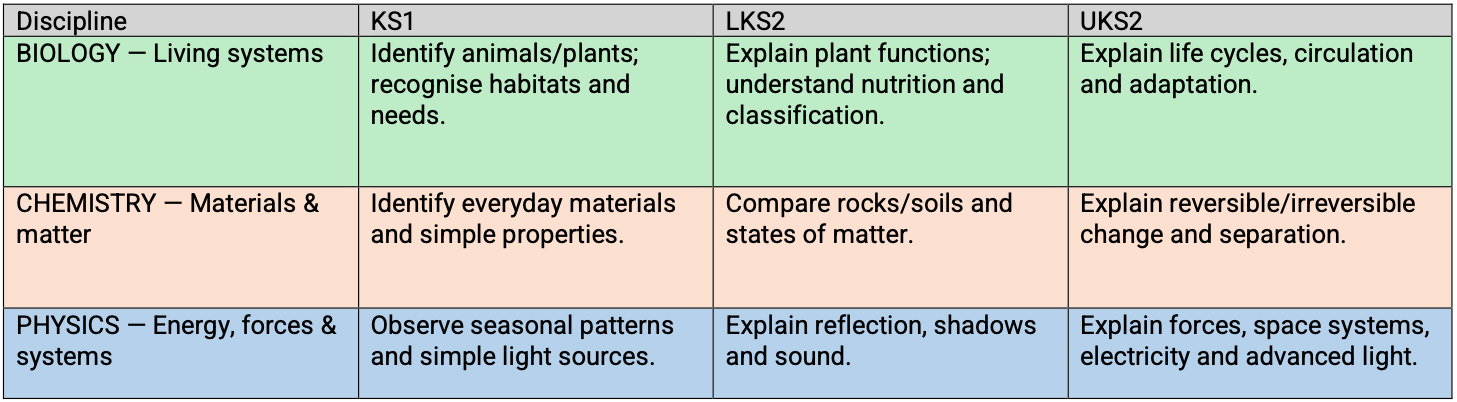
At Shebbear Community School, our science curriculum is designed to ignite curiosity and develop confident, capable scientific thinkers. We want pupils to understand the world around them, ask thoughtful questions, use evidence carefully and apply their knowledge with independence. Through carefully sequenced learning in biology, chemistry and physics, we equip children with the knowledge, language and disciplinary skills they need to thrive in a rapidly changing world and to contribute positively to it.
How this is achieved: Curriculum Design
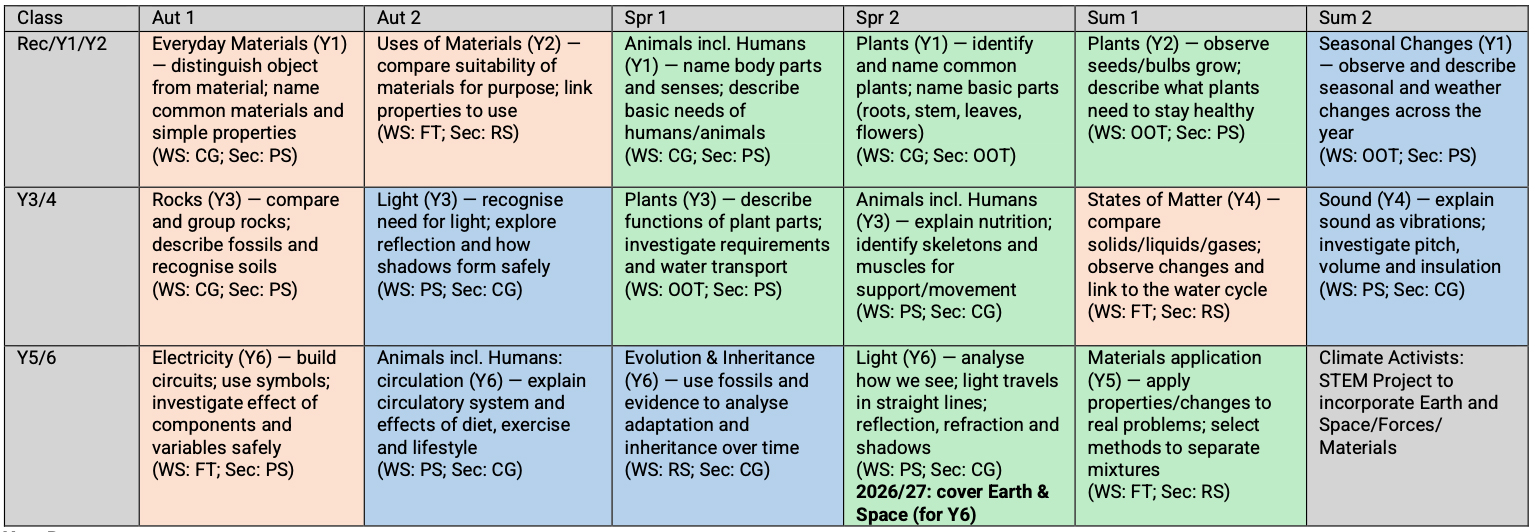
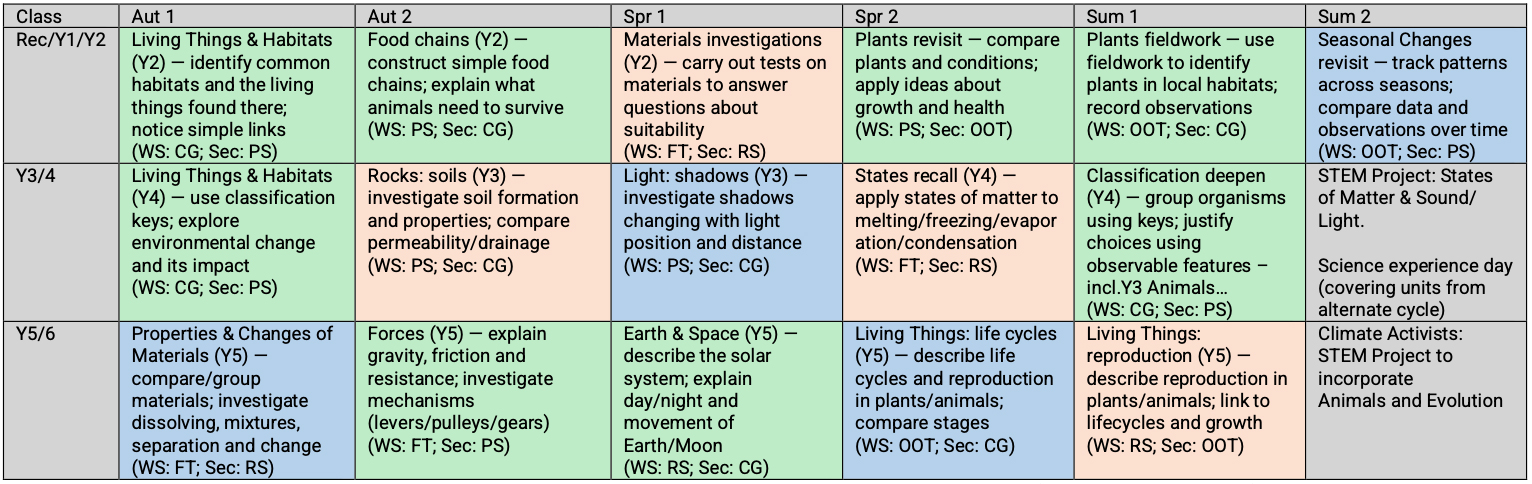
• Coherent sequencing for mixed-age classes – Our two-year cycle is deliberately structured to protect conceptual progression and avoid fragmented learning. Key dependencies are secured (e.g. States of Matter before Sound), ensuring knowledge builds cumulatively and meaningfully.
• Clear progression in substantive knowledge – Scientific concepts are organised around core big ideas within biology, chemistry and physics. Learning revisits and deepens understanding rather than repeating content, enabling pupils to know more and remember more over time.
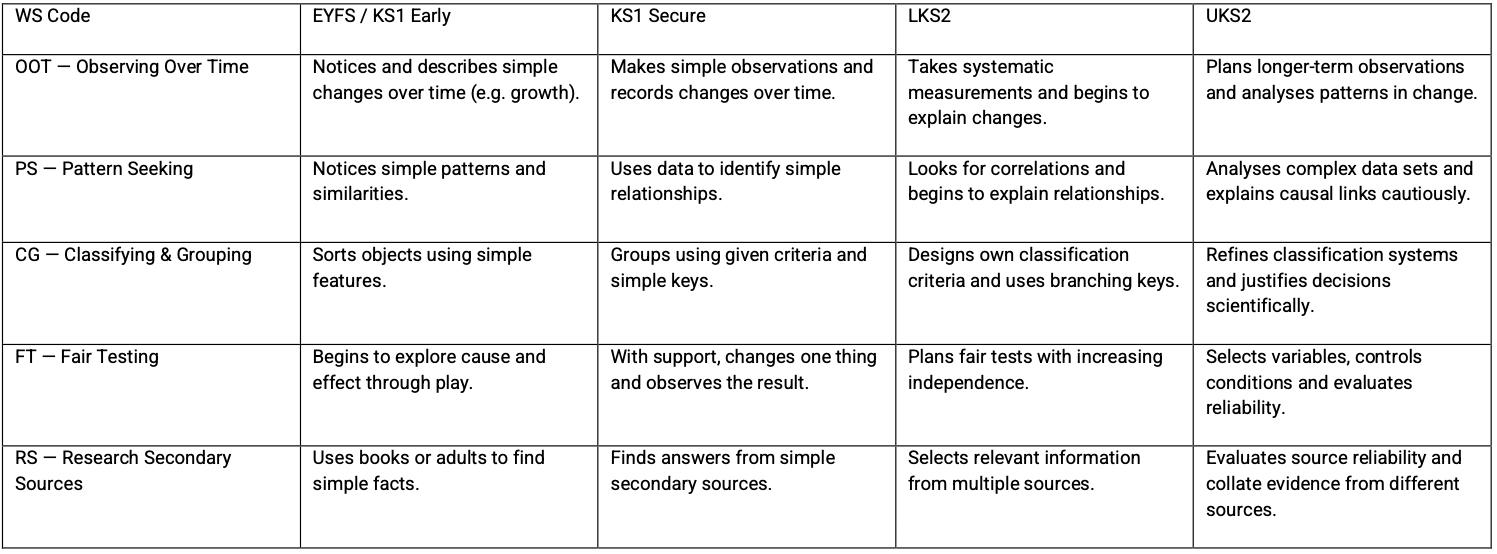
• Deliberate development of Working Scientifically – Pupils experience all five enquiry approaches — observing over time, pattern seeking, classifying and grouping, fair testing, and research using secondary sources. Enquiry types are matched carefully to content so that scientific thinking is fit for purpose and grows in sophistication across the key stages.
• Balanced disciplinary exposure – We avoid over-reliance on fair testing and ensure pupils regularly classify, interpret patterns, analyse change over time and evaluate information. Disciplinary complexity increases from simple sorting and observation in EYFS and KS1 to justification, evaluation and synthesis in UKS2.
• Strong foundations from EYFS onwards – Early experiences of noticing, questioning and describing change lay the groundwork for formal scientific enquiry, ensuring progression begins before statutory science teaching.
• Language and precision – Scientific vocabulary is explicitly taught and revisited, enabling pupils to articulate their thinking clearly and accurately.
• Real-world relevance – Science is connected to everyday experience, global challenges and future pathways. Pupils leave us curious, critical and prepared for further scientific study.
By the end of Year 6, our pupils leave as thoughtful, informed and responsible young citizens. They can question, investigate and reason with evidence, applying their scientific understanding to real-world issues that shape their lives and communities. With secure knowledge across biology, chemistry and physics, and growing confidence in analysing information and evaluating claims, they are prepared not only for the academic demands of secondary science but for participation in a rapidly changing world. They leave us curious, critical and equipped to contribute positively — understanding that science is not just something they study, but something that helps them interpret, influence and improve the world around them.